Agent Systems: Goal Setting, Prioritization, and Termination
Figure
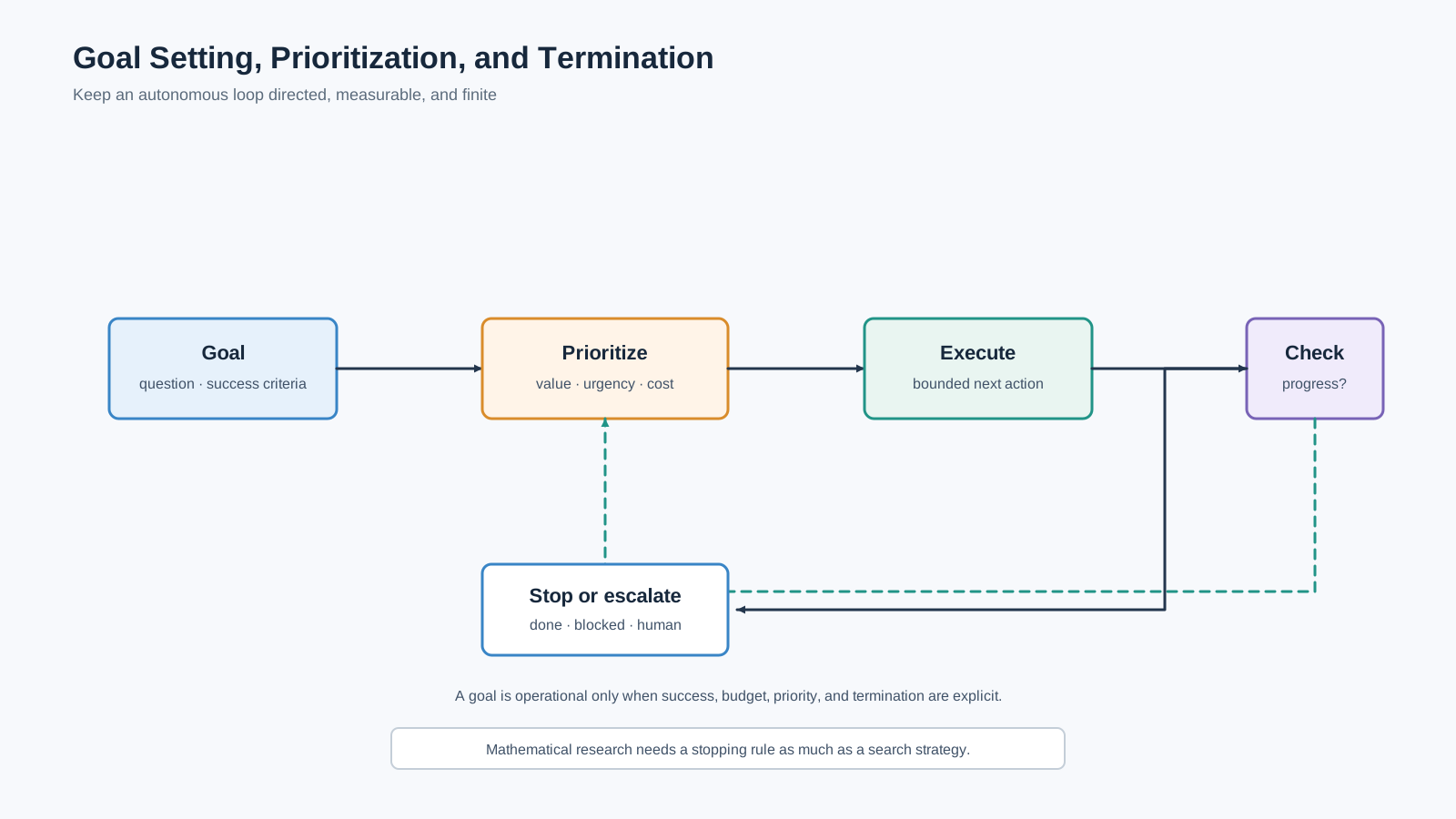
Figure: goals become operational through priorities, bounded actions, progress checks, and termination.
In one sentence. State the objective, how progress is measured, and what makes stopping correct; termination is a design decision, not an accident of budget.
Problem
Autonomous execution can drift from the user’s objective, spend resources on low-value actions, or continue after meaningful progress has stopped.
Intent and structure
goal → milestones → prioritized action → progress check → continue, redirect, or stop
A goal needs a success criterion, scope, budget, priority, dependencies, and termination policy. Monitor artifacts and state transitions rather than conversational confidence.
Termination conditions
Stop when the goal is achieved, a quality threshold is met, the budget is exhausted, no progress occurs after bounded attempts, or a human interrupts. Distinguish semantic completion (“the agent says done”) from verified completion (“the required artifact passed its checks”).
Forces and failure modes
Aggressive stopping saves cost but can miss a solution; permissive stopping can run indefinitely. Make the stopping decision observable and allow escalation or replanning when the goal changes.
Real-world application
For a long-running migration or investigation, a goal ledger records milestones, dependencies, budget, and termination criteria. Monitoring can distinguish real progress from repeated tool calls and stop or escalate when the goal becomes infeasible.
Reference basis
The source pattern is Gulli, Agentic Design Patterns, Chapter 11, “Goal Setting and Monitoring.” Dibia’s orchestrator loop and task-management treatment appears in Designing Multi-Agent Systems, Chapters 2 and 7; the task and progress ledgers are also explicit in the Magentic-One technical report.